Views: 137 Author: Site Editor Publish Time: 2026-09-24 Origin: Site


Selecting between a standard wall-mounted unit and a high-capacity 22kW model is a critical infrastructure choice. This decision directly impacts installation costs, electrical requirements, and long-term project viability. Many buyers assume higher kilowatt ratings automatically equal faster charging speeds. However, this remains a common misconception. Vehicle limitations and local grid constraints often prevent maximum power delivery. Understanding these bottlenecks is essential for project planning.
We designed this article to provide a clear technical and commercial evaluation framework. It helps you match charger specifications to actual site capabilities and user demands. You will learn how to evaluate grid capacity, analyze dwell times, and select appropriate software features. Proper planning prevents costly over-engineering while ensuring a seamless charging experience. By applying these guidelines, you can deploy a reliable, cost-effective infrastructure tailored precisely to your facility.
Vehicle On-Board Charger (OBC) ratings dictate the maximum AC charging speed; a 22kW charger will not speed up an EV capped at 11kW.
Standard 7.4kW wall-mounted chargers operate on single-phase power, making them highly cost-effective for residential deployment.
22kW AC EV chargers require three-phase electrical infrastructure and are best suited for commercial applications with high turnover rates.
Implementing dynamic load balancing within a smart EV charger system can mitigate the need for expensive grid upgrades.
Before purchasing hardware, you must understand the underlying electrical requirements. EV chargers do not operate independently of the local grid. They draw substantial continuous power. Therefore, matching the equipment to your electrical supply is mandatory.
A standard wall mounted AC EV charger typically delivers 7.4kW of power. It operates on a single-phase electrical supply drawing up to 32 amps. This configuration matches standard residential grid infrastructure perfectly. It requires minimal electrical modifications, keeping installation costs low.
Moving up a tier brings us to 11kW models. These units utilize three-phase power at 16 amps. They strike an excellent balance. They offer faster charging times while maintaining moderate grid demand. Many modern commercial buildings support 16A three-phase power easily.
Conversely, a 22kW AC EV charger demands highly robust electrical infrastructure. It requires a three-phase power supply running at a full 32 amps. Older buildings rarely support this load without significant panel upgrades. You must verify your main breaker capacity before choosing this option.
Electrical output from the charger only tells half the story. The vehicle itself determines the final charging speed. Electric vehicles store energy as Direct Current (DC). However, the power coming from the grid is Alternating Current (AC).
Every EV features an internal AC-to-DC converter called the On-Board Charger (OBC). The OBC has a hard-coded maximum intake rating. If you plug an EV with an 11kW-limited OBC into a 22kW charger, the vehicle only accepts 11kW. The extra capacity remains entirely unused.
Common Mistake: Facility managers often overspend on 22kW chargers for employee parking. If the employee fleet consists of vehicles with 7.4kW or 11kW OBCs, the hardware upgrade wastes capital. Always check fleet or tenant vehicle specifications as your mandatory first step before procurement.
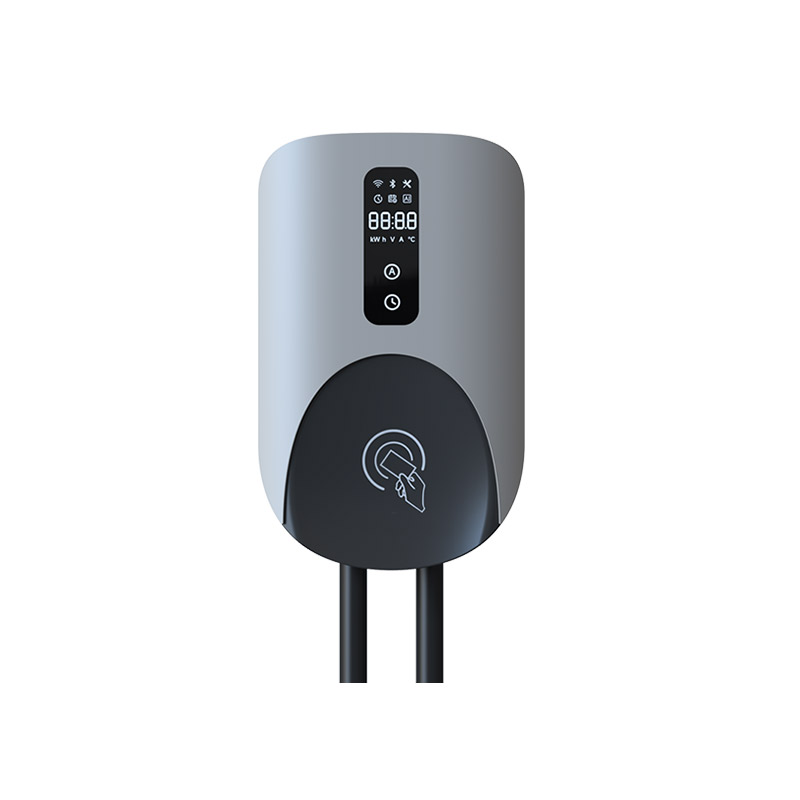
Hardware costs represent a fraction of the total project budget. The electrical installation often dictates final feasibility. Ignoring grid capacity leads to severe budget overruns and delayed deployments.
You must determine if your site supports single-phase or three-phase power. Residential properties typically run on single-phase power. Commercial properties usually feature three-phase power. However, having three-phase power does not guarantee sufficient spare capacity.
Perform a thorough site audit using these specific steps:
Review your main electrical panel rating.
Calculate existing peak load during maximum facility usage.
Subtract the peak load from the main panel rating to find spare capacity.
Determine if the remaining capacity supports continuous 32A loads per charger.
Consider the cost analysis carefully. The hardware price difference between a standard charger and a 22kW model is relatively small. The hidden costs lie in electrical upgrades. Running new, thicker copper cabling for 32A three-phase power is expensive. Upgrading transformers or trenching new conduit often doubles the initial project estimate.
Hardware Power and Phase Breakdown
Charger Type | Power Output | Phase Requirement | Amperage |
|---|---|---|---|
Standard Wall Unit | 7.4kW | Single-Phase | 32A |
Mid-Tier Wall Unit | 11kW | Three-Phase | 16A |
High-Capacity Unit | 22kW | Three-Phase | 32A |
Correctly assessing site load capacity prevents utility penalties. Power companies fine commercial entities for exceeding peak demand thresholds. Installing uncontrolled 22kW chargers often triggers these expensive penalties during peak hours.
Sometimes, downgrading your hardware specifications provides the best financial outcome. If your site lacks 32A three-phase power, specify an 11kW or 7.4kW unit instead. This approach keeps your project within existing electrical thresholds. It eliminates the need for expensive utility grid upgrades while still delivering reliable daily charging.
User behavior should dictate hardware selection. The amount of time a vehicle remains parked is known as "dwell time." Understanding dwell time helps you deploy the most efficient charging solution.
Dwell time realities make a home EV charging station straightforward to specify. Most residential charging happens overnight. Vehicles typically remain plugged in for 8 to 12 hours.
During an 8-hour session, a 7.4kW charger delivers nearly 60kWh of energy. This equates to over 200 miles of driving range. Therefore, a 7.4kW or 11kW unit is more than sufficient for a full overnight charge.
A 22kW charger is rarely justified for residential use. Upgrading a home to three-phase power is prohibitively expensive. The only valid exception involves households charging multiple high-capacity EVs simultaneously on a shared circuit.
Commercial environments face entirely different user dynamics. Retail centers, gyms, and supermarkets follow destination charging logic. Dwell times typically range from 2 to 4 hours.
In these short windows, a commercial EV charger needs to deliver maximum energy. A 22kW unit excels here. It allows compatible vehicles to gain meaningful range quickly. This rapid turnover increases customer satisfaction and improves station availability.
Fleet applications also benefit significantly from 22kW speeds. Delivery vans and taxi fleets operate on tight schedules. Maximizing vehicle uptime justifies the higher initial infrastructure investment. Getting a vehicle back on the road an hour earlier generates measurable business value.
Modern charging infrastructure relies heavily on software. Hardware pushes the power, but software manages the efficiency. Selecting a smart EV charger ensures your network remains scalable and secure.
Multi-charger deployments risk overloading local grid capacity. Dynamic Load Balancing (DLB) prevents this scenario entirely. DLB software monitors total facility energy consumption in real-time.
If the building nears its maximum electrical limit, the DLB system automatically reduces power to the chargers. When building demand drops, the chargers resume full-speed operation. DLB is essential regardless of whether you use 11kW or 22kW units. It allows you to install more chargers without triggering expensive main panel upgrades.
Commercial operators require billing systems and remote diagnostics. This requires Open Charge Point Protocol (OCPP) compliance. OCPP is a global, open-source communication standard. It allows chargers from different manufacturers to communicate with a central management system.
Using OCPP 1.6J or 2.0.1 compliant hardware is non-negotiable for commercial sites. It enables seamless user access control via RFID cards or mobile apps. It also prevents vendor lock-in. If you dislike your software provider, OCPP lets you migrate to a new platform without replacing the physical chargers.
Intelligent energy management features directly impact operational expenses. Smart chargers allow facility managers to configure specific charging schedules.
You can program the system to delay charging until late at night. Utilities typically offer cheaper off-peak electricity rates during these hours. Capitalizing on these off-peak rates lowers monthly energy bills significantly. This feature proves especially valuable for fleet operators managing dozens of vehicles daily.
Selecting the right vendor is just as critical as choosing the right power output. You need durable hardware backed by reliable technical support.
EV chargers often endure harsh environmental conditions. Always verify regional safety certifications before procurement. Look for CE marks in Europe, UL listing in North America, and TÜV certifications globally.
Check the Ingress Protection (IP) and Impact Protection (IK) ratings. For outdoor installations, require at least an IP54 or IP65 rating to ensure dust and water resistance. An IK08 or IK10 rating guarantees the casing can withstand accidental impacts or vandalism.
When deploying a customized EV charging solution, assess the vendor's OEM and ODM capabilities. Strong manufacturers offer extensive customization.
White-labeling: The ability to brand the charger casing and user interface with your company logo.
Cable customization: Offering custom cable lengths (e.g., 5m vs 7m) to suit specific parking layouts.
Software integrations: Tailoring backend API connections to sync with your existing fleet management software.
Carefully review warranty terms and technical support Service Level Agreements (SLAs). Ensure the vendor maintains an accessible inventory of replacement parts. Understand your regional requirements regarding connectors. Specify whether you need Type 1 (J1772) or Type 2 (Mennekes) tethered cables to ensure seamless compatibility with local vehicles.
Choosing between standard wall-mounted units and 22kW models requires a balanced assessment of grid capacity and user behavior. Choose 7.4kW or 11kW standard units for cost-effective residential and workplace charging where long dwell times prevail. Opt for 22kW units for commercial sites, destination charging, and rapid-turnover fleets, provided existing three-phase power is available.
Avoid assumptions about charging speeds. Always verify the On-Board Charger (OBC) limitations of the vehicles using the facility. We strongly recommend conducting a comprehensive site energy audit as your definitive next step. Contact technical sales today for a detailed project consultation or request a customized hardware specification sheet to begin your infrastructure planning.
A: Generally, no. Your vehicle’s On-Board Charger dictates the maximum speed. An 11kW EV will only draw 11kW from a 22kW charger. However, if you plan to upgrade to a heavier-duty EV soon, or want to future-proof a commercial property, the investment may make strategic sense.
A: No. A true 22kW AC charger requires a three-phase power supply running at 32 amps. Single-phase electrical infrastructure can safely support a maximum of 7.4kW (at 32 amps). Attempting to wire a 22kW unit into single-phase power violates safety codes.
A: The hardware price difference is marginal. The major cost gap lies in electrical upgrades. 22kW units require thicker copper wiring, three-phase breakers, and sometimes upgraded transformers. Upgrading a site from single-phase to three-phase power can increase installation budgets drastically.
A: It depends on your geographic region. Type 1 cables (J1772) are standard in North America and operate on single-phase power. Type 2 cables (Mennekes) are standard in Europe and most global markets, supporting both single-phase and three-phase (22kW) power delivery.


