Views: 124 Author: Site Editor Publish Time: 2026-09-28 Origin: Site


Grid instability and extreme weather events increasingly threaten our daily comfort and modern security. Simultaneously, utility companies continue to raise peak-hour electricity rates. Exporting solar energy back to the grid without net metering severely diminishes your financial returns. Homeowners face a pressing need to solve this inefficiency. Achieving reliable outage protection matters more than ever today. You must maximize the self-consumption of the energy you generate. A carefully planned setup ensures a safe, long-term return on your investment. This guide provides a transparent, specification-driven framework for evaluating your options. We bypass confusing marketing claims to focus on architecture, chemistry, and installation realities. You will learn exactly how to analyze capacities, navigate local fire codes, and select the right hardware to keep your household running smoothly during any grid failure.
The choice between AC-coupled, DC-coupled, and hybrid architectures dictates installation complexity and retrofit compatibility.
Lithium Iron Phosphate (LFP) has become the baseline standard for safety and longevity in home energy storage, outperforming older NMC chemistries.
Evaluating capacity (kWh) is only half the equation; continuous power output (kW) determines which household appliances can actually run during an outage.
True cost-of-ownership must account for hardware, installation, permitting, and inverter compatibility, not just the battery unit price.
Choosing the right architecture forms the foundation of any successful energy project. How you connect your storage hardware determines your overall system efficiency. It also dictates how easily you can upgrade in the future. A well-designed residential energy storage system must align with your existing electrical panel and solar array. The industry divides these architectures into three distinct categories.
AC-coupled systems connect directly to your home’s existing alternating current (AC) electrical panel. This setup requires a separate battery inverter to operate. The solar panels produce direct current (DC), which a solar inverter turns into AC. The battery inverter then converts this AC power back into DC for storage.
This dual-conversion process creates a specific set of pros and cons. It is widely considered the best approach for an existing rooftop solar energy storage upgrade. You do not have to tear out or replace your current solar inverter. However, you will experience slightly lower round-trip efficiency. Each conversion step loses a small percentage of energy as heat.
DC-coupled systems connect directly to the solar panels before the power reaches an inverter. The electricity flows from the panels straight into the battery as direct current. This method avoids the redundant AC-to-DC conversions.
The primary advantage here is high efficiency. You experience minimal conversion loss during the charging process. On the downside, DC-coupled setups are complex and costly to retrofit into existing arrays. They require rewiring the direct power lines from the roof. Installers usually recommend this approach only for specialized commercial setups or very specific off-grid scenarios.
A modern hybrid energy storage system utilizes a single hybrid inverter. This advanced component manages both the solar DC input and the battery DC input simultaneously. It simplifies the entire electrical pathway.
From an evaluation lens, this architecture is ideal for new installations. It drastically reduces the hardware footprint on your garage wall. Fewer standalone components also mean fewer point-of-failure risks. If you are installing solar and storage at the same time, this integrated approach delivers the best reliability.
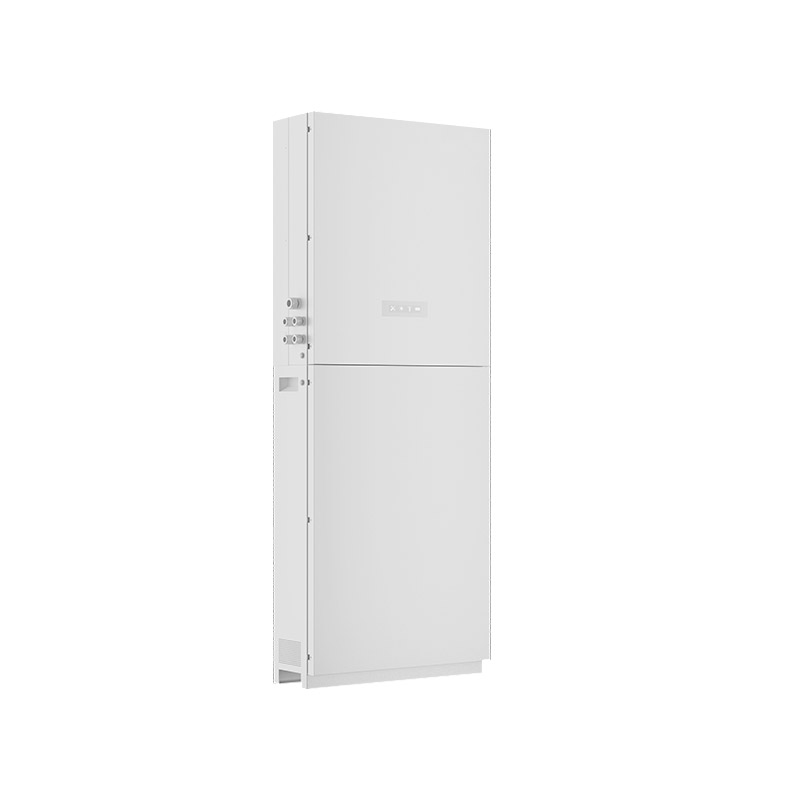
The chemical composition inside your battery cells dictates how the unit performs over a decade. It also determines how safe the unit is to mount inside your home. Manufacturers use several different chemical formulas. Not all chemistries belong in a residential environment.
Lithium Iron Phosphate stands out as the dominant technology today. An LFP residential battery offers exceptional thermal stability. This means the cells resist overheating and present minimal fire risk. Furthermore, they boast a significantly longer cycle life. Most premium units easily exceed 6,000 charge cycles before noticeable degradation occurs.
When weighing your decisions, LFP should carry the highest weight. It currently serves as the industry standard for safe indoor or garage installations. Installers prefer them because they easily pass stringent local fire codes.
NMC chemistry powers most electric vehicles. It provides a higher energy density than LFP. You get more storage capacity packed into a smaller physical footprint. If you have extreme space constraints, NMC might seem appealing.
However, NMC batteries suffer from faster degradation over time. They also carry a higher risk of thermal runaway if damaged or overcharged. Because of these safety concerns, manufacturers are increasingly phasing them out for home use. They remain viable only where wall space is severely limited.
The market sometimes highlights alternative solutions like sodium-ion or flow batteries. You should view these through a skeptical lens. While they acknowledge certain raw material advantages, they lack widespread residential deployment. Local installers rarely have familiarity with these niche setups. More importantly, they lack the proven 10-year field data required to guarantee a secure investment.
Homeowners often misunderstand how to read specification sheets. Looking at a single number will not tell you if a system can power your household. You must evaluate multiple dimensions to size a home battery backup correctly.
Capacity and power are entirely different metrics. Capacity represents how long the battery lasts. It is measured in kilowatt-hours (kWh). For example, a 10 kWh battery can theoretically run a 1 kW load for 10 hours. It acts like the size of a gas tank.
Continuous and peak power represent how much energy the system can deliver at one exact moment. This is measured in kilowatts (kW). It acts like the horsepower of an engine. You need high continuous power to run heavy loads. Air conditioners, well pumps, and electric ovens require significant surges to start. If your power output is too low, the system will overload and shut down, even if the battery is fully charged.
Metric | Unit | What It Determines | Real-World Example |
|---|---|---|---|
Capacity | kWh | Duration of backup power | Keeping a fridge running for 24 hours |
Continuous Power | kW | Simultaneous appliance usage | Running lights, Wi-Fi, and a TV at the same time |
Peak Power | kW | Starting heavy motor loads | The initial surge needed to kick on an HVAC compressor |
You cannot use every drop of energy stored in a cell. The Depth of Discharge (DoD) dictates the usable capacity versus the nominal capacity. Evaluate this carefully. A 10 kWh battery with a 90% DoD only offers 9 kWh of actual backup power. Pushing a battery past its recommended DoD damages the internal cells permanently.
Round-trip efficiency impacts your long-term return directly. This metric defines the percentage of energy retained after charging and discharging. You should look for systems rated greater than 90%. Anything lower means you are wasting the valuable solar power generated on your roof as heat loss.
Energy needs rarely stay static. Your household consumption will likely increase over the next decade. Buying a monolithic system locks you into a fixed capacity. A flexible architecture provides better financial control.
A modular home ESS features a building-block design. These systems allow you to stack individual battery blocks onto a single inverter base. Manufacturers typically size these blocks in 5 kWh increments. You simply plug a new module into the existing tower when you need more storage.
This approach offers incredible future-proofing benefits. Consider these specific advantages:
Lower Initial Investment: Homeowners can start with a smaller budget. You only buy enough capacity to cover essential loads.
Adaptive Expansion: You can expand seamlessly as your energy needs grow. Purchasing an electric vehicle (EV) or upgrading to a heat pump requires massive energy reserves.
Simplified Maintenance: If one block fails, you only replace that specific module. The rest of the system continues functioning normally.
You must verify compatibility rules before committing. Always ensure the manufacturer guarantees compatibility with mixed-age battery modules. Adding a brand-new battery to a five-year-old degraded stack causes problems in poorly designed systems. The software sometimes throttles the performance of the new unit to match the degraded output of the older modules. Ask your installer to confirm how the Battery Management System (BMS) handles uneven cell ages.
Marketing brochures rarely discuss the complexities of a physical installation. The quoted price for the hardware represents just one part of the project. Real-world implementation involves strict regulations, hidden components, and complex warranty terms.
Apply skeptical analysis when reading warranty documents. A standard "10-year warranty" sounds comforting, but it often includes restrictive clauses. Warranties usually expire earlier if a specific energy throughput is reached. Throughput measures the total megawatt-hours (MWh) cycled through the unit.
If you cycle your system aggressively every single day, you might hit the throughput limit in year seven. You must also check the End of Life (EOL) capacity guarantee. A strong warranty guarantees the battery will retain at least 60% to 70% of its original capacity at the end of the term.
Installation constraints dictate where you can place the hardware. Strict safety regulations apply across all jurisdictions.
UL 9540 Certification: Inspectors demand this safety certification. It proves the battery and inverter were tested together for thermal runaway safety.
Clearance Rules: Fire codes mandate setback rules. Systems must maintain specific distances from doors, windows, and utility meters.
AHJ Restrictions: The local Authority Having Jurisdiction (AHJ) might restrict indoor mounting. Many cities now require exterior mounting or specific garage bollards to prevent vehicle impact.
Grid compliance is non-negotiable. A battery will not provide outage protection on its own. You need an isolation switch, known as an Automatic Transfer Switch (ATS). This device physically disconnects your house from the grid during a blackout.
This process is called islanding. It prevents your system from back-feeding live electricity into dead grid wires. Back-feeding can severely injure line workers repairing the local utility poles. Installing a robust ATS adds significant labor. Expect this component to add $1,500 to $3,000 to your overall installation costs.
Choosing the best backup solution requires evaluating your specific electrical landscape. The shortlisting logic remains straightforward once you understand the technical constraints. Choose a hybrid architecture if you are installing new solar panels simultaneously. Opt for an AC-coupled setup if you want to retrofit an existing array without replacing inverters. Regardless of the architecture, insist on LFP chemistry for maximum safety and longevity.
Your next steps require precise planning. First, audit your critical loads panel to separate essential circuits from whole-home demands. Second, secure comprehensive quotes from at least three NABCEP-certified installers. Finally, demand a detailed breakdown separating hardware costs from soft costs like permitting and transfer switches. This structured approach guarantees a resilient, high-performing energy foundation for your home.
A: Taking a home entirely off-grid requires massive oversizing. Grid-tied backup systems handle temporary outages for a few hours or days. True off-grid setups require significantly larger battery capacities and off-grid specific inverters. You must generate enough winter solar power to survive weeks of cloudy weather without utility support.
A: It depends on your connected loads. A 10kWh battery typically runs essential baseline loads—like a refrigerator, Wi-Fi, and LED lights—for 12 to 16 hours. If you turn on heavy appliances like a central air conditioner or electric oven, that same 10kWh will drain in less than two hours.
A: Yes. If you keep your existing solar inverter, you need an AC-coupled setup. This requires adding a dedicated battery inverter to the wall. Alternatively, you can replace your existing solar inverter with a newer hybrid inverter that manages both the panels and the battery simultaneously.
A: LFP batteries boast excellent cycle life, usually exceeding 6,000 cycles. If cycled daily, the chemistry can last 15 to 20 years before severe degradation. However, calendar aging and inverter component wear mean the practical lifespan of the overall system is closer to 12 to 15 years.


