Views: 145 Author: Site Editor Publish Time: 2026-09-20 Origin: Site


Deploying commercial battery projects carries massive financial and operational stakes. You need reliable performance for decades to ensure continuous profitability. This makes your choice of production partner absolutely critical. The market currently faces a flood of white-label assemblers. They often claim to be original manufacturers falsely. They create severe risks concerning regulatory compliance, site safety, and stranded assets. You must distinguish genuine engineering partners from pure trading companies. This article provides a rigorous, evidence-based evaluation framework. You will learn how to vet a custom energy storage system manufacturer beyond surface-level data sheets and initial price quotes. We detail how to analyze engineering workflows, safety architectures, and supply chain transparency. These insights help you ensure project success and mitigate catastrophic downstream failures.
A reliable manufacturer must prove financial stability and supply chain transparency to mitigate long-term operational risks.
Engineering validation requires looking past standard specs to assess their capabilities in custom battery module design and rapid prototype production.
Safety isn't just a certification checkbox; it requires demonstrable hardware and software integration, specifically advanced BMS protection and thermal management.
Total cost of ownership is dictated by after-sales support, warranty enforceability, and long-term service level agreements (SLAs).
You must establish internal baselines before engaging any suppliers. Identify your exact requirements for cycle life and energy density. You should outline hard spatial constraints for the installation site. Establishing a target return on investment ensures you evaluate quotes accurately. Clear success metrics prevent suppliers from pushing mismatched off-the-shelf products. They keep your procurement team focused on engineered solutions tailored to your operational needs.
Many companies present themselves as factories but operate as trading firms. You need to distinguish a true BESS manufacturer from a basic white-label assembler. Genuine manufacturers maintain robust in-house research and development teams. They own their intellectual property and hardware design schematics. Assemblers simply buy generic components and pack them into branded enclosures. Ask for facility videos and engineering headcounts early in the procurement process. True manufacturers welcome factory audits and deep technical evaluations.
Supplier financial stability directly impacts your technical success long-term. Partnering with a financially unstable energy storage battery supplier carries enormous operational risk. If they go bankrupt, you face stranded assets immediately. You lose access to critical firmware updates and ongoing technical troubleshooting. Bankrupt suppliers also leave you holding completely voided product warranties. Request audited financial statements and bank reference letters. Verify their history of successfully funded enterprise-scale deployments.
Evaluate the standard timeline of your prospective production partner carefully. Track their process from initial CAD conceptualization to physical engineering validation testing. A structured workflow proves they understand complex hardware integration challenges. Ask them to map out specific milestones for tooling and software configuration. Strong engineering teams communicate potential mechanical delays clearly upfront. They never promise impossibly fast turnaround times just to secure an initial contract.
Standard enclosures rarely fit specialized industrial applications perfectly. You must verify their capacity to engineer a custom battery module precisely. The module must match specific thermal constraints and strict spatial limitations. Avoid partners forcing pre-built form factors into your unique architectural design. Ask them for case studies showing unique structural modifications and robust thermal routing. True customization involves adjusting cell spacing, busbar configurations, and liquid cooling channels.
The early building phase reveals a supplier's true technical competence accurately. You must evaluate their prototype production process rigorously before authorizing mass manufacturing. Look for transparent reporting on cell-matching tolerances during the first assembly. Demand detailed data on initial cycle testing and thermal behavior mapping. Good manufacturers provide comprehensive failure mode analysis during early test builds. They use these early engineering insights to refine the final mass-production blueprint.
Manufacturer Capability Evaluation Framework
Capability Metric | True Original Manufacturer | White-Label Assembler |
|---|---|---|
R&D Investment | High; employs dedicated internal engineers | Low; relies entirely on external designs |
Iteration Speed | In-house rapid hardware iteration | Outsourced or highly limited modification |
Software Control | Proprietary source code access | Black-box third-party software controllers |
Safety architecture demands seamless integration between physical components and operating software. You must assess whether the manufacturer develops their system controllers internally. Relying on third-party black-box electronics creates dangerous monitoring blind spots. In-house development ensures hardware components communicate flawlessly alongside advanced safety algorithms. When unique errors occur, internal teams can patch the software immediately. Segmented supply chains delay critical safety updates significantly, exposing your site to risk.
Battery management systems form the critical operational brain of your installation. You need to verify specific protocols for BMS protection carefully during evaluation. Ask how the logic prevents overcharge and over-discharge scenarios actively. Request exact testing data regarding physical short-circuit prevention mechanisms. Thermal runaway prevention remains the absolute most critical safety threshold. The management system must isolate failing modules before cell temperatures escalate dangerously.
Basic CE marks do not guarantee commercial safety standards for industrial sites. You must demand proof of localized regulatory compliance immediately upon shortlisting. Ask for UL 1973 and UL 9540 documentation for North American projects. Require IEC 62619 certificates for international commercial deployments. The manufacturer should provide testing reports directly from recognized third-party laboratories. Generic compliance claims often hide fundamental engineering flaws in the module design.
Battery cells determine the ultimate lifespan of your entire grid system. You must require strict documentation regarding their active cell allocation agreements. Verify their direct access to Tier-1 lithium iron phosphate production lines. Shady suppliers often use bait-and-switch tactics during final mass production. They might prototype using premium cells but switch to B-grade alternatives later. Demand strict serial number traceability from the cell manufacturer to your facility.
Global supply chain bottlenecks can stall your deployment project indefinitely. You must evaluate how the supplier mitigates these severe logistical disruptions. Ask about their backup sourcing strategies for critical electronic components. Inverters, microchips, and specialized contactors frequently face severe global market shortages. Strong manufacturers maintain redundant supplier networks for all essential internal parts. They keep strategic safety stock to ensure continuous uninterrupted production.
Identify secondary suppliers for microcontrollers and switching components.
Request inventory audit reports on long-lead structural enclosure materials.
Verify geographic diversity inside their component sourcing strategy.
Shipping lithium batteries involves highly complex international transportation regulations. Address cross-border compliance long before signing a final purchase order. Ensure they hold current UN38.3 hazardous materials shipping certifications. Discuss exactly how the supplier handles import tariffs and customs duties. Clarify whether they operate under DDP (Delivered Duty Paid) or FOB shipping terms. Misunderstanding these specific incoterms can add massive unexpected fees to your project.
Not all battery warranties offer genuine financial protection for the buyer. You must differentiate between "calendar life" and "cycle life" claims clearly. A ten-year calendar warranty means nothing if it caps cycles artificially low. Define exactly what legally constitutes a physical degradation failure in the contract. Some suppliers claim severe capacity retention loss represents normal operating behavior. You need specific testing parameters to prove capacity loss fairly and legally.
A vague service promise will not help during a major system outage. You must establish strict expected response times in writing beforehand. Define the exact window for remote troubleshooting and diagnostic support. Specify concrete timelines for mandatory on-site intervention when remote fixes fail entirely. Enforceable service agreements penalize the manufacturer financially for excessive system downtime. This forces them to prioritize your operational continuity above other tasks.
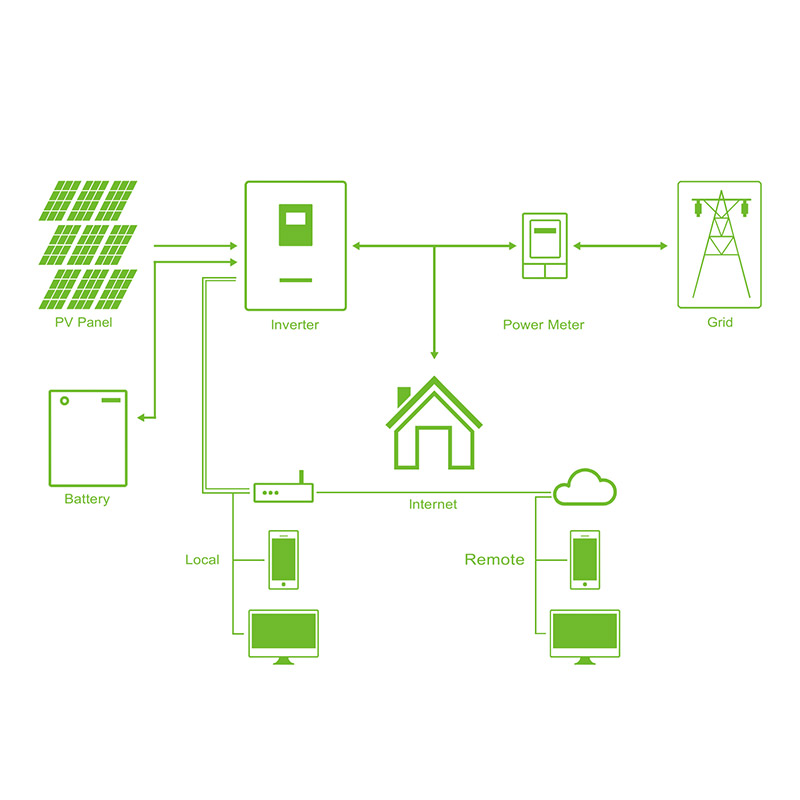
Battery systems require continuous software optimization long after the initial deployment. Verify the infrastructure for OTA (Over-The-Air) remote firmware updates thoroughly. Ongoing after-sales support depends heavily on this seamless internet connectivity. Ask how they manage end-of-life recycling protocols and physical site decommissioning. Proper lifecycle management reduces your long-term environmental liability significantly. A responsible manufacturer plans for the hardware's retirement from day one.
You should start by demanding key technical and financial documents upfront. Use a structured RFI process to filter out unqualified assemblers quickly.
Request three years of audited financial statements to prove enterprise stability.
Demand a complete breakdown of their engineering team structure and headcount.
Ask for UN38.3 and UL compliance certificates for similar past builds.
Require engineering case studies detailing specific thermal management solutions.
Never commit to mass production without a thorough physical facility inspection. You can conduct this using your internal team or a third-party auditor. Focus heavily on automated testing equipment during the factory walkthrough. Manual testing introduces unacceptable human error into delicate battery manufacturing processes. Inspect their ISO-rated cleanroom standards for module assembly carefully. Verify QA/QC gates exist at every major assembly stage to catch defects.
A single lump-sum quote often hides critical engineering cost drivers. You need to request a phased pricing model immediately from the supplier. Ask them to separate NRE (Non-Recurring Engineering) costs from physical production. Require an explicit financial breakdown of initial prototype validation costs. Understand how mass-production scaling reduces the per-unit price eventually over time. This pricing transparency helps you evaluate their true manufacturing efficiency accurately.
Evaluating a manufacturer acts as a critical strategic risk-mitigation exercise. It goes far beyond a simple routine procurement task. You must look beyond slick marketing materials to verify actual engineering depth. The lowest upfront quote often signals a severely compromised internal safety architecture. It usually indicates non-existent service infrastructure down the line. You should initiate your vetting process by requesting a pilot prototype today. Demand a detailed technical audit from your shortlisted candidates to ensure success.
A: Standard timelines range from 4 to 12 weeks depending on system complexity. The process involves mechanical R&D, structural tooling, and initial safety testing. Off-the-shelf cells integrate faster, while unique thermal management designs require extended engineering validation phases.
A: You should request third-party audit reports and D&B ratings immediately. Ask for official bank reference letters to confirm liquidity. You must also verify their track record through direct case studies with established enterprise clients.
A: Mismatched off-the-shelf BMS hardware creates dangerous integration blind spots. Proprietary systems ensure localized thermal management and highly precise SoC/SoH algorithms. This close integration validates warranty claims and isolates failing cells before thermal runaway occurs.
A: A robust contract requires defined SLA response times for remote and on-site troubleshooting. It must detail software update frequency and strict performance degradation thresholds. You should also demand a guaranteed availability window for critical replacement parts.


